

Designing a nursery should feel exciting—not overwhelming. This guide is your complete, step-by-step blueprint for a space that’s as beautiful as it is secure. If you’re feeling the pressure of balancing style with strict safety standards, you’re not alone. It’s easy to overlook critical details when you’re preparing for a new baby. That’s why this walkthrough goes beyond the obvious, covering every corner with a practical, real-world checklist built from hands-on parenting experience. By the end, you’ll have a clear plan for a safe nursery setup, giving you total confidence and peace of mind before your baby arrives.
The Core of Safety: Mastering the Sleep Space
Let’s be honest—setting up a nursery can feel overwhelming. Every product claims to be “essential,” and well-meaning relatives may insist that the crib from 1992 is just fine. But when it comes to sleep, safety isn’t nostalgic.
Crib Selection starts with modern standards: fixed sides and slats no more than 2 3/8 inches apart (per the U.S. Consumer Product Safety Commission). Older, drop-side cribs were banned in 2011 because of entrapment and suffocation risks. That hand-me-down might look charming, but outdated hardware and wider slats can turn sweet dreams into real danger.
The Perfect Fit Mattress matters just as much. Try the “two-finger test”: if you can fit more than two fingers between the mattress and crib frame, it’s too loose. Gaps create spaces where babies can become trapped. (And yes, wrestling a mattress into place is frustrating—but worth it.)
Bare Is Best. The American Academy of Pediatrics recommends:
- No bumpers
- No loose blankets
- No pillows or stuffed animals
A clutter-free crib reduces the risk of Sudden Infant Death Syndrome (SIDS).
Finally, think about Strategic Crib Placement. Keep it away from windows, blind cords, outlets, and heaters. A safe nursery setup isn’t about perfection—it’s about removing preventable risks so everyone sleeps easier.
Structuring the Room: Furniture and Layout for Safety
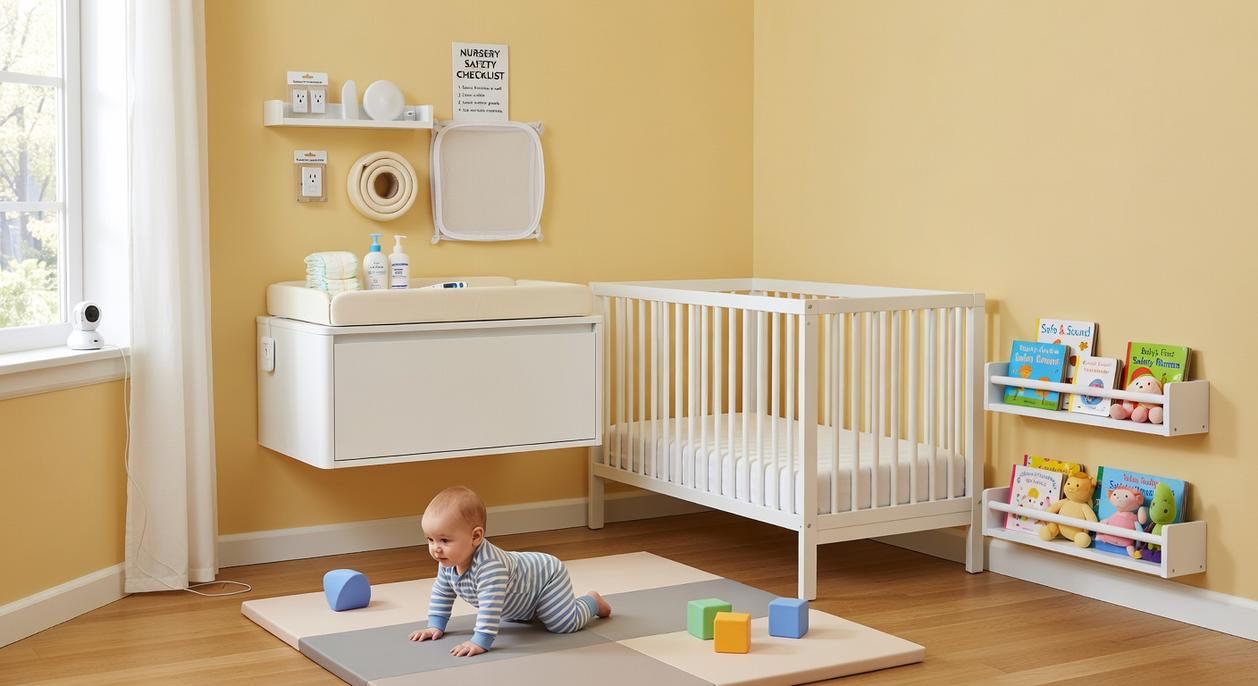
A beautiful nursery means nothing if it isn’t SAFE. The real win? Peace of mind. When your room is structured with intention, you reduce daily stress and dramatically lower accident risks (which helps you actually sleep at night).
The Anchor Rule
Heavy furniture must be secured to the wall—no exceptions. Dressers, bookshelves, and wardrobes can tip if a child climbs or pulls on drawers. Use anti-tip brackets, locate wall studs with a stud finder, and fasten the furniture tightly according to manufacturer instructions. According to the U.S. Consumer Product Safety Commission, thousands of tip-over injuries happen each year, many involving young children. Anchoring takes minutes, but the payoff is HUGE: fewer emergency scares and a truly safe nursery setup.
Some argue anchoring isn’t necessary if furniture is “stable enough.” But toddlers are surprisingly strong and curious (think tiny parkour athlete). Stability isn’t safety—anchoring is.
Softer Edges
Rounded-corner furniture reduces head injury risk. If replacing furniture isn’t practical, add soft corner guards. They’re inexpensive, quick to install, and can prevent painful bumps during wobbly first steps.
The Changing Station Checklist
Create a NO-HANDS-OFF zone. Keep:
- Diapers
- Wipes
- Creams
- A spare outfit
All within arm’s reach. This ensures you never step away, even “just for a second.” The benefit? Constant supervision and zero risky scrambling.
Floor Plan for Function
Design wide, clutter-free pathways between crib, chair, and door. Late-night feedings are exhausting—you don’t need obstacle courses. Clear walkways mean fewer trips, smoother routines, and calmer nights for everyone.
Securing the Perimeter: Windows, Doors, and Outlets
Creating a safe nursery setup starts with the basics—but the details make all the difference.
Electrical Safety 101
Standard plastic outlet plugs are common, yet many toddlers learn to pry them out (tiny engineers in the making). A better option is sliding outlet covers, which automatically close when a plug is removed. These are spring-loaded faceplates that replace your existing outlet cover, reducing shock risk without small detachable parts. According to the U.S. Consumer Product Safety Commission (CPSC), electrical receptacles are a leading source of home injuries for young children.
Equally important is cord management. Use cord shorteners, wall-mounted cord channels, or furniture anchors to keep lamp, monitor, and sound machine cords secured and out of reach. Some argue that simply placing cords “higher up” is enough. However, as babies begin pulling to stand—often during periods discussed in understanding developmental milestones in the first year—their reach expands quickly.
Window Wisdom
Next, address window coverings. The CPSC reports that corded blinds pose a strangulation hazard to children under 5. Cordless blinds or curtain panels eliminate dangling loops entirely. For upper floors, install window guards or window stops that limit openings to less than 4 inches (wide enough for air, not wide enough for escape attempts).
Doorway Dangers
Little fingers and heavy doors don’t mix. Pinch guards cushion door hinges, while doorknob covers restrict access to off-limit rooms. Some parents feel constant supervision is enough—but doors close fast (and toddlers move faster).
The Choking Hazard Sweep
Finally, get on your hands and knees. Scan at baby eye level for loose buttons, decor beads, or toy parts smaller than 1.25 inches in diameter—the CPSC’s small-parts test size. If it fits in a toilet paper roll, it’s a risk. A five-minute sweep today prevents a midnight scare tomorrow.
Creating a Healthy Atmosphere
Breathe easy by choosing low-VOC or zero-VOC paints; they release fewer volatile organic compounds, meaning cleaner indoor air from day one. As a result, your baby rests without inhaling lingering fumes (and you skip that “new paint” headache). Next, improve airflow with cracked windows or a purifier, especially in city homes or for sensitive little lungs. Better ventilation supports sleep, focus, and wellness. Finally, choose natural cotton, wool, or linen for rugs and bedding; fewer synthetics mean fewer irritants. These swaps strengthen your safe nursery setup and deliver health benefits. Pro tip: wash fabrics before use.
To create a serene nursery environment, incorporating thoughtful design and storage solutions is essential, and you can find helpful techniques in our article ‘Parental Hacks Fpmomtips‘ to make the process even smoother.
From Anxious Planning to Confident Peace of Mind
You started this journey wanting reassurance that your baby’s space is truly protected. Now, you have a complete roadmap for creating a safe nursery setup that covers every detail—from anchored furniture to the smallest hidden hazards.
That lingering fear of “Did I forget something?” is replaced with calm confidence. By layering safety measures throughout the room, you’ve built protection that works together to keep your little one secure.
Don’t let doubt creep back in. Do one final walkthrough today, check off each item, and enjoy the peace of mind every parent deserves.
 James R. writes the kind of child wellness and growth insights content that people actually send to each other. Not because it's flashy or controversial, but because it's the sort of thing where you read it and immediately think of three people who need to see it. James has a talent for identifying the questions that a lot of people have but haven't quite figured out how to articulate yet — and then answering them properly.
They covers a lot of ground: Child Wellness and Growth Insights, Tips on Positive Behavior Strategies, Time-Saving Routines for Busy Moms, and plenty of adjacent territory that doesn't always get treated with the same seriousness. The consistency across all of it is a certain kind of respect for the reader. James doesn't assume people are stupid, and they doesn't assume they know everything either. They writes for someone who is genuinely trying to figure something out — because that's usually who's actually reading. That assumption shapes everything from how they structures an explanation to how much background they includes before getting to the point.
Beyond the practical stuff, there's something in James's writing that reflects a real investment in the subject — not performed enthusiasm, but the kind of sustained interest that produces insight over time. They has been paying attention to child wellness and growth insights long enough that they notices things a more casual observer would miss. That depth shows up in the work in ways that are hard to fake.
James R. writes the kind of child wellness and growth insights content that people actually send to each other. Not because it's flashy or controversial, but because it's the sort of thing where you read it and immediately think of three people who need to see it. James has a talent for identifying the questions that a lot of people have but haven't quite figured out how to articulate yet — and then answering them properly.
They covers a lot of ground: Child Wellness and Growth Insights, Tips on Positive Behavior Strategies, Time-Saving Routines for Busy Moms, and plenty of adjacent territory that doesn't always get treated with the same seriousness. The consistency across all of it is a certain kind of respect for the reader. James doesn't assume people are stupid, and they doesn't assume they know everything either. They writes for someone who is genuinely trying to figure something out — because that's usually who's actually reading. That assumption shapes everything from how they structures an explanation to how much background they includes before getting to the point.
Beyond the practical stuff, there's something in James's writing that reflects a real investment in the subject — not performed enthusiasm, but the kind of sustained interest that produces insight over time. They has been paying attention to child wellness and growth insights long enough that they notices things a more casual observer would miss. That depth shows up in the work in ways that are hard to fake.