

If you’re searching for a realistic way to manage your home, kids, and personal goals without feeling constantly behind, you’re in the right place. Many moms are overwhelmed not because they’re doing too little—but because they’re doing too much without a clear structure that actually works for family life. That’s where time blocking for moms can make a meaningful difference.
This article breaks down how to use simple, flexible time blocking strategies that fit around school runs, nap schedules, work hours, and the unexpected moments every parent knows too well. You’ll learn how to create manageable routines, reduce decision fatigue, and protect time for what truly matters—without rigid schedules that fall apart by Tuesday.
The strategies shared here are rooted in practical parenting experience, child development insights, and proven productivity methods adapted specifically for modern motherhood. By the end, you’ll have a clear, actionable approach to organizing your days with less stress and more confidence.
From Chaos to Calm: Reclaiming Your Schedule as a Parent
Feeling pulled in every direction is parenting norm. Work, school, meals, emails—it’s relentless. This guide offers practical, field-tested systems that restore structure without fantasy-level discipline. We’ve tested these in messy weeks. Start here:
- Audit your week; cut one nonessential commitment.
- Use time blocking for moms to protect work and family priorities.
- Build a Sunday reset ritual to plan meals, rides, and self-care.
Some argue spontaneity keeps family life joyful. True, but predictable rhythms reduce stress hormones and decision fatigue, according to APA. Implement one tactic today calmly.
The Essential Mindset Shift: Prioritize, Don’t Just Organize
Here’s the truth: you cannot do it all. The goal isn’t a color-coded, Pinterest-perfect schedule. It’s a functional one that protects your energy.
Start with the Big Rocks principle. “Big Rocks” are the 3–4 non-negotiable priorities that truly matter this week—like a school recital, a major work deadline, or three workouts. Write them down. Schedule them first. Everything else fits around them.
Next, release perfection. Perfectionism (the belief that every task must be flawless) slows progress. A “good enough” dinner, a 15-minute tidy, or store-bought cupcakes still count. Progress beats polish.
Try this simple filter before saying yes:
- Does this support one of my Big Rocks?
- Do I realistically have time?
- What will I need to give up to fit this in?
If it doesn’t align, decline kindly.
Pro tip: Use time blocking for moms by assigning focused blocks to each Big Rock (even 30 minutes works). Protect those blocks like appointments. (Yes, even from laundry.)
Core Technique #1: Time Blocking for Maximum Focus
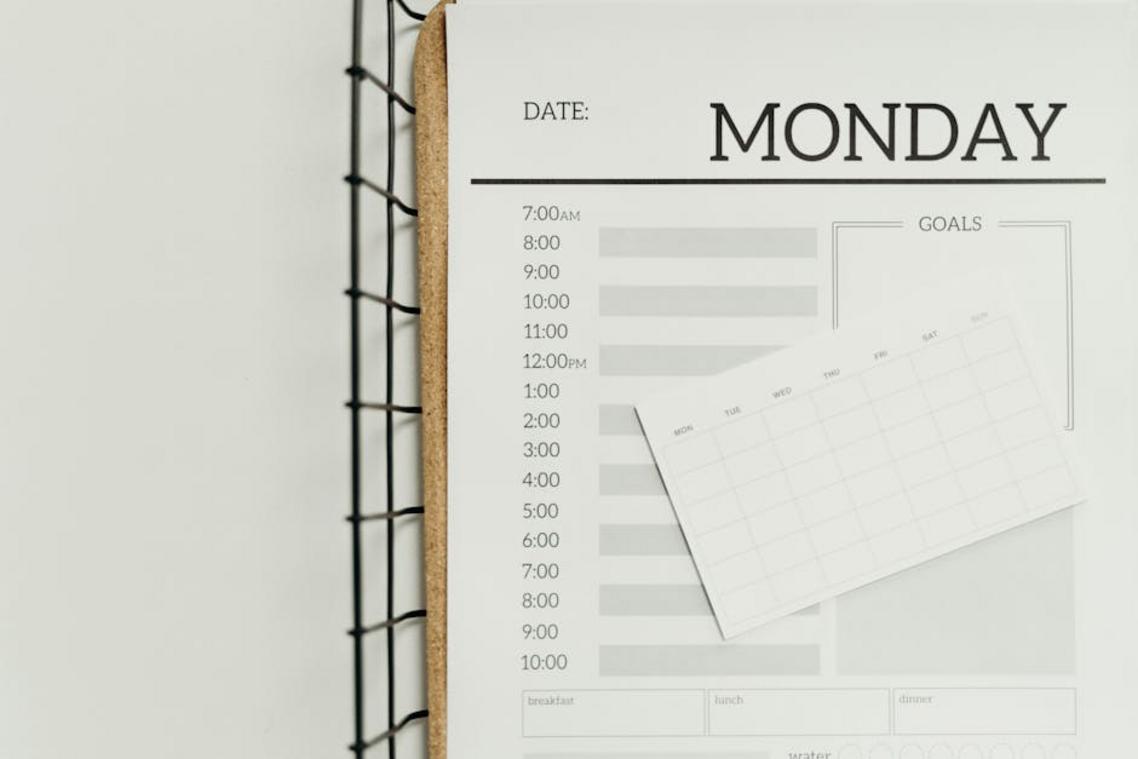
Last year, I found myself answering emails while stirring pasta and quizzing my child on spelling words (multitasking at its finest—and worst). That’s when I committed to Time Blocking: the practice of assigning a specific task or category of tasks to every block of time in your day, eliminating guesswork. In short, every hour has a job.
For parents, this works because it creates clear boundaries between “work time,” “kid time,” and “chore time.” Instead of constantly switching roles, you’re fully present in each. Research shows task switching can reduce productivity by up to 40% (American Psychological Association). Clear blocks reduce that mental drain.
Here’s a simple weekday example:
| Time | Task |
|---|---|
| 6:30–7:30 AM | Breakfast + school prep |
| 8:00–9:00 AM | School drop-off + commute |
| 9:00–11:00 AM | Focused work block (meetings/projects) |
| 11:00–11:30 AM | Emails (task batching) |
| 3:00–5:00 PM | Pick-up + homework help |
| 5:00–6:00 PM | Dinner prep |
| 8:30–9:00 PM | Wind-down time |
Notice the 11:00 AM email block. That’s Task Batching—grouping similar tasks into one window to reduce context switching. I also batch errands into one afternoon (gas, groceries, returns—done).
Some argue rigid schedules feel restrictive. Fair. However, I’ve found structure actually creates freedom (counterintuitive, I know). When dinner prep has a slot, I’m not stressing about it at 2 PM.
If meals derail your evenings, try these weekly meal planning strategies that save hours.
Ultimately, time blocking for moms isn’t about perfection—it’s about intention.
Core Technique #2: Themed Days to Reduce Decision Fatigue
Themed Days are exactly what they sound like: assigning each day of the week a specific focus so you’re not constantly deciding what to tackle next. Instead of asking, “What should I be doing right now?” (for the tenth time before noon), you already know.
This system works because it reduces decision fatigue—the mental drain that comes from making too many small choices (a concept popularized by psychologist Roy Baumeister). When your brain isn’t juggling endless options, it has more energy for what actually matters—like patience at bedtime.
Here’s a simple template I recommend starting with:
- Admin Monday – Pay bills, book appointments, answer school emails
- Tidy Tuesday – Laundry and a 15-minute family room reset
- Errand Wednesday – Groceries, returns, pharmacy runs
- Deep Work Thursday – Focused projects using time blocking for moms
- Family Fun Friday – Movie night, pizza, board games
Involve your kids. On Tidy Tuesday, set a timer and have everyone reset their space together. Predictability builds cooperation (kids thrive on routine—just ask any early childhood expert).
Some argue themed days feel rigid. I disagree. Structure actually creates freedom. When you know Thursday is deep work day, you stop squeezing big tasks into chaotic Tuesdays.
Start simple. Test it for two weeks. Adjust. Keep what works.
Your Secret Weapons: Essential Tools and Micro-Routines
Busy homes don’t need more motivation—they need better systems. So let’s compare.
Shared digital calendar vs. memory juggling. A tool like Google Calendar keeps everyone synced in real time. Dentist at 3? Soccer at 5? It’s visible to all. Memory, on the other hand, fails (usually at 7:45 a.m.). Digital wins for coordination.
Kitchen whiteboard vs. endless texts. A physical board shows the weekly plan at a glance—meals, pickups, reminders. Text threads get buried. A whiteboard stays put.
Notes app vs. mental clutter. Brain-dumping tasks into your phone clears cognitive load—a term psychologists use for the mental effort of remembering things (American Psychological Association). Thoughts feel lighter when written down.
Now, layer in routines.
First, the Sunday Reset: 30 non-negotiable minutes to review schedules, plan meals, and prep logistics. Think of it as your control tower. Pro tip: Use time blocking for moms during this session to assign focused windows for key tasks.
Next, the 10-Minute Tidy. Everyone resets shared spaces before bed. Ten minutes nightly beats a two-hour Saturday meltdown.
Finally, create a Landing Zone by the door—hooks, baskets, shoe trays. Keys live there. Backpacks live there. Morning chaos doesn’t.
Systems beat willpower. Even Batman had gadgets.
Modern parenthood feels overwhelming because the system around you is chaotic—not because you are failing. You now have a toolkit: Time Blocking, Themed Days, Micro-Routines, and even time blocking for moms to create breathing room. These work because structure creates intention, and intention creates freedom (yes, really).
I’ll be honest: no schedule is perfect. Kids get sick. Plans unravel. Experts debate the “right” routine. But small systems reduce daily friction.
This week, choose one method. Just one. Try it consistently. Adjust gently. Progress beats perfection. Start small, observe what works, and give yourself grace along the way each day forward.
Make Your Days Feel Manageable Again
You came here looking for a realistic way to take control of your schedule without sacrificing your sanity. Now you have practical strategies to prioritize what matters, reduce daily chaos, and create a rhythm that works for your family.
The overwhelm, the constant interruptions, the feeling that there’s never enough time — that’s the real pain point. When every day feels reactive instead of intentional, it drains your energy and patience. Using time blocking for moms gives you structure, clarity, and breathing room so you can stop spinning your wheels and start moving through your day with purpose.
The next step is simple: choose one small block of time tomorrow and protect it. Start there. Build momentum. Stay consistent.
If you’re ready for calmer mornings, smoother routines, and a plan you can actually stick to, explore more of our mom-tested strategies and start implementing them today. Thousands of modern moms rely on these proven systems to simplify their days — and you can too. Take control of your time now and feel the difference immediately.
 James R. writes the kind of child wellness and growth insights content that people actually send to each other. Not because it's flashy or controversial, but because it's the sort of thing where you read it and immediately think of three people who need to see it. James has a talent for identifying the questions that a lot of people have but haven't quite figured out how to articulate yet — and then answering them properly.
They covers a lot of ground: Child Wellness and Growth Insights, Tips on Positive Behavior Strategies, Time-Saving Routines for Busy Moms, and plenty of adjacent territory that doesn't always get treated with the same seriousness. The consistency across all of it is a certain kind of respect for the reader. James doesn't assume people are stupid, and they doesn't assume they know everything either. They writes for someone who is genuinely trying to figure something out — because that's usually who's actually reading. That assumption shapes everything from how they structures an explanation to how much background they includes before getting to the point.
Beyond the practical stuff, there's something in James's writing that reflects a real investment in the subject — not performed enthusiasm, but the kind of sustained interest that produces insight over time. They has been paying attention to child wellness and growth insights long enough that they notices things a more casual observer would miss. That depth shows up in the work in ways that are hard to fake.
James R. writes the kind of child wellness and growth insights content that people actually send to each other. Not because it's flashy or controversial, but because it's the sort of thing where you read it and immediately think of three people who need to see it. James has a talent for identifying the questions that a lot of people have but haven't quite figured out how to articulate yet — and then answering them properly.
They covers a lot of ground: Child Wellness and Growth Insights, Tips on Positive Behavior Strategies, Time-Saving Routines for Busy Moms, and plenty of adjacent territory that doesn't always get treated with the same seriousness. The consistency across all of it is a certain kind of respect for the reader. James doesn't assume people are stupid, and they doesn't assume they know everything either. They writes for someone who is genuinely trying to figure something out — because that's usually who's actually reading. That assumption shapes everything from how they structures an explanation to how much background they includes before getting to the point.
Beyond the practical stuff, there's something in James's writing that reflects a real investment in the subject — not performed enthusiasm, but the kind of sustained interest that produces insight over time. They has been paying attention to child wellness and growth insights long enough that they notices things a more casual observer would miss. That depth shows up in the work in ways that are hard to fake.