Ever watched your child play and wondered, “Are they actually learning anything?” You’re not alone. This question nags at many parents. How does play (something) so simple (impact) a child’s brain?
The truth is, play is a cornerstone of development, a bridge to learning. With psychology children play, it’s not just fun; it’s foundational. This article breaks down complex psychological ideas into easy, everyday actions.
Trust me, it’s built on solid child development principles. We’ll explore how play fosters growth and offer practical tips you can use right now. Ready to open up your child’s potential? together.
Why Play is a Child’s ‘Work’: The Simple Science Behind It
Here’s the thing: play isn’t just fun for kids; it’s their main gig. Every time a child builds a tower, they’re not just stacking blocks. They’re wiring up their brains.
I mean, who knew that a few wooden blocks could do so much heavy lifting in terms of neural connections? Let’s face it, children’s play is a form of work. And it’s surprisingly serious business.
The psychology children play tells us that play is all about teaching cause-and-effect, problem-solving, and resilience. Think of it like this: when a toddler repeatedly drops a spoon, they’re not just making a mess. They’re running a little physics experiment on gravity.
Kids are natural scientists. They learn through trial and error, the essence of scientific inquiry.
Then there’s the concept of ‘intrinsic motivation.’ It’s simple. Kids are wired to learn and explore. They play because they’re naturally curious, and they find joy in discovery.
This is where the science early language acquisition comes into play, enhancing their ability to communicate and understand their world. For more on how children learn through play and language, check out science early language acquisition.
In short, play is how kids work. It’s how they make sense of everything around them. That’s impressive, isn’t it?
Building Blocks of Growth: Play’s Role in Development
I remember the first time I let my daughter scramble up the jungle gym. My heart was pounding, convinced she’d fall. But you know what?
She didn’t. Watching her tackle new heights, I saw firsthand how physical play. Like running, climbing (develops) gross motor skills.
Kids learn spatial awareness too. They figure out how to assess risks themselves.
Then there’s constructive play. Think LEGOs or drawing. It’s not just idle fun.
It hones fine motor skills and teaches the value of planning. Patience and focus become second nature. And let’s not forget the sneaky math and engineering concepts creeping in.
Ever calculated how many blocks to keep a tower standing? Exactly.
Now, pretend and dramatic play. Costume parties and “house” might seem frivolous, but they’re a powerhouse for social-emotional growth. I watched my son play dress-up, morphing into heroes and villains.
It struck me how he learned empathy and language. Understanding emotions and social cues. It’s like seeing a mini-shrink in action (his stuffed animals were frequent patients).
And games with rules? Board games and tag, those bastions of childhood, teach life skills. I remember the epic battles over Candy Land.
Kids learn turn-taking and following directions. Managing frustration and good sportsmanship sneak into their repertoire. It’s not just about winning; it’s mastering the art of losing gracefully, a skill many adults still struggle with.
These types of play are not just games; they’re important to understanding psychology children play. Mistakes are part of the package. But isn’t that the point?
We grow when we fail and rise again. Building blocks aren’t just toys; they’re foundational lessons in disguise.
Match Play to Your Child’s Stage: A Parent’s Guide
When it comes to play, it’s not just about keeping kids busy. It’s about matching what they do to where they are developmentally. This might sound obvious, but it’s worth emphasizing.

Infants (0-1 Year): Sensory play is the way to go. Think textured balls and crinkly books. Peek-a-boo too. These simple games build foundational brain connections. Ever wondered why babies laugh at peek-a-boo? It’s not just cute; it’s neurologically important. Their brains are wiring up every time you see their little faces light up.
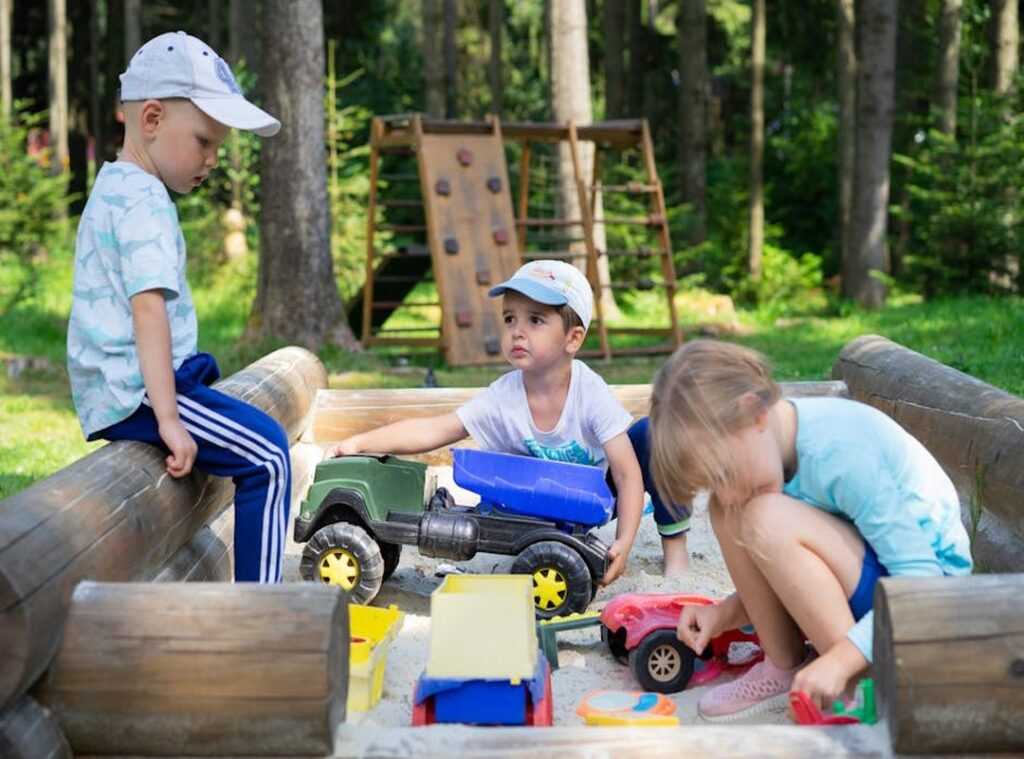
Toddlers (1-3 Years): Now, these tiny humans are starting to engage in parallel play. They love playing alongside others without actually playing with them. Block-building and scribbling come into play here. It might seem mundane, but when they imitate household chores, they’re learning. Every washcloth wipe is a lesson in the psychology children play out.
School-Aged Children (6+ Years): Here, it gets strategic. Games become more about logic and teamwork. They start understanding the concept of winning and losing. Collaborative projects and hobbies also come into play. These activities develop long-term thinking, which is key as they grow.
Preschoolers (3-5 Years): Welcome to the era of cooperative and imaginative play. This is where you start seeing those elaborate pretend scenarios. Playing “doctor” or “store” isn’t just cute; it fosters key social skills. Board games and creative art projects? Yes, they’re important too. They teach problem-solving and creativity.
And hey, let’s not forget about how family dynamics play a role too. How Birth Order Shapes Personality is a fascinating topic that ties into how kids play and interact.
Are we all doing this parenting thing right? Probably not all the time. But understanding these stages helps us get a bit closer.
Besides, kids are resilient. They’re learning through every game, every pretend store, and every round of peek-a-boo.
Your Role in Their Play: Supporting Without Taking Over
Doesn’t every parent worry about messing it up? I sure did. You’re not alone.
The fear of “doing it wrong” is universal. But here’s the thing: your role isn’t to direct but to support. Think of yourself as a scaffold.
What’s scaffolding? It’s about being a guide, not a director. Give them just enough help to solve a problem themselves.
When your child is engrossed in their world, don’t jump in with answers. Instead, ask open-ended questions. “What are you building?” or “What happens next?” These questions invite them to think and express rather than just follow orders.
Here’s a pro tip: Resist the urge to solve every problem. Let them struggle a bit. growth happens. I learned this the hard way when my daughter was building a block tower.
She was frustrated, sure, but she figured it out eventually. And the pride on her face was priceless.
Avoid taking over their play. Don’t impose adult logic on their imaginative world. Their creativity doesn’t need our structure.
Just observe sometimes. Watch how they problem-solve. You’ll gain takeaways into their thoughts and feelings.
Psychology children play isn’t just a fancy term. It’s about understanding their development through play. So, embrace the chaos.
Let them lead. Your role is to support, not control. You’ll be surprised at how much they grow when given the freedom to explore.
And sometimes, the best thing you can do is simply watch.
Play: The Real Power Move
Play isn’t just fun. It’s the most important work of childhood. Worried your child isn’t learning enough while playing?
You’re not alone. But here’s the truth: understanding the ‘why’ behind play transforms worry into confidence. Psychology children play shows us that this is where growth happens. Want to see it for yourself?
This week, set aside 15 minutes. Join your child’s world on their terms. Ask questions.
Follow their lead. Watch the magic of learning unfold before your eyes. Feeling empowered yet?
You’re not just a parent; you’re their best teacher. Ready to embrace the power of play?
 Thalara Zyphandella has opinions about child wellness and growth insights. Informed ones, backed by real experience — but opinions nonetheless, and they doesn't try to disguise them as neutral observation. They thinks a lot of what gets written about Child Wellness and Growth Insights, Daily Digest, Time-Saving Routines for Busy Moms is either too cautious to be useful or too confident to be credible, and they's work tends to sit deliberately in the space between those two failure modes.
Reading Thalara's pieces, you get the sense of someone who has thought about this stuff seriously and arrived at actual conclusions — not just collected a range of perspectives and declined to pick one. That can be uncomfortable when they lands on something you disagree with. It's also why the writing is worth engaging with. Thalara isn't interested in telling people what they want to hear. They is interested in telling them what they actually thinks, with enough reasoning behind it that you can push back if you want to. That kind of intellectual honesty is rarer than it should be.
What Thalara is best at is the moment when a familiar topic reveals something unexpected — when the conventional wisdom turns out to be slightly off, or when a small shift in framing changes everything. They finds those moments consistently, which is why they's work tends to generate real discussion rather than just passive agreement.
Thalara Zyphandella has opinions about child wellness and growth insights. Informed ones, backed by real experience — but opinions nonetheless, and they doesn't try to disguise them as neutral observation. They thinks a lot of what gets written about Child Wellness and Growth Insights, Daily Digest, Time-Saving Routines for Busy Moms is either too cautious to be useful or too confident to be credible, and they's work tends to sit deliberately in the space between those two failure modes.
Reading Thalara's pieces, you get the sense of someone who has thought about this stuff seriously and arrived at actual conclusions — not just collected a range of perspectives and declined to pick one. That can be uncomfortable when they lands on something you disagree with. It's also why the writing is worth engaging with. Thalara isn't interested in telling people what they want to hear. They is interested in telling them what they actually thinks, with enough reasoning behind it that you can push back if you want to. That kind of intellectual honesty is rarer than it should be.
What Thalara is best at is the moment when a familiar topic reveals something unexpected — when the conventional wisdom turns out to be slightly off, or when a small shift in framing changes everything. They finds those moments consistently, which is why they's work tends to generate real discussion rather than just passive agreement.