Remember those early days of parenthood? The sleepless nights, the endless diaper changes, and the constant anxiety over every little coo and babble. You’re probably on edge waiting for those first magical words.
The excitement and anxiety are real. But what if I told you understanding language acquisition children doesn’t have to be nerve-wracking?
This guide offers a straightforward approach to language development. No clinical mumbo-jumbo. Just real, practical steps from someone who’s been there.
You’ll get a clear path to supporting your child’s first words. Fun activities, key milestones, and the know-how to recognize when extra help might be needed.
I get it (parenting) is tough. But with these takeaways, you’ll feel more confident in nurturing your child’s language journey. Ready to dive in?
Let’s make those first words count.
The Wonderful World of Words: Key Language Milestones by Age
Language acquisition is like magic unfolding in slow motion. Yet, every child’s path is their own. These are general milestones, not a checklist of parenting victories or failures.
Birth to 6 Months: At this stage, it’s all about pre-linguistic skills. Babies are soaking up everything and making some noise too. Cooing and gurgling become the soundtrack of your life. They also start responding to sounds and your tone (yes, they know when you really mean it).
6 to 12 Months: This is when babbling kicks in. Think “bababa” and other adorable nonsense. They begin to grasp simple words like “no” or their own name. Gestures become a thing too, like waving goodbye. It’s fascinating to watch their understanding bloom.
1 to 2 Years: Here comes the “word explosion” phase. Suddenly, first words spill out, and they can point to objects when named. They even start combining words, turning “more milk” into their very own sentence. It’s impressive how quickly their vocabulary grows.
2 to 3 Years: Now, they’re crafting simple sentences and throwing in pronouns for good measure. They can understand simple questions and respond with more than a nod or shake of the head. Their vocabulary leaps to 50+ words, turning them into mini-conversationalists.
Remember, every child is unique and may not follow these milestones to the letter. And that’s perfectly okay. Understanding their pace is key.
Just like understanding childhood fears phobias.
Pro tip: Encourage their language skills through play and conversation. It’s more effective than any flashcards could ever be. And honestly, way more fun.
Language acquisition in children is a journey that’s as much about discovery for them as it is for you. Embrace it.
Your Everyday Playbook: Fun Activities to Encourage Talking
Language learning doesn’t need fancy toys or special prep time. It starts with what you’re already doing. Think about how you can transform daily routines into language-learning opportunities.
Narrating your day is a great start. When I say, “I’m washing the big, red apple,” or “You are stacking the blue blocks,” I’m using something called self-talk and parallel talk. You’re probably already doing this without even knowing!
It’s simple and surprisingly effective. Kids learn words like sponges soaking up water.
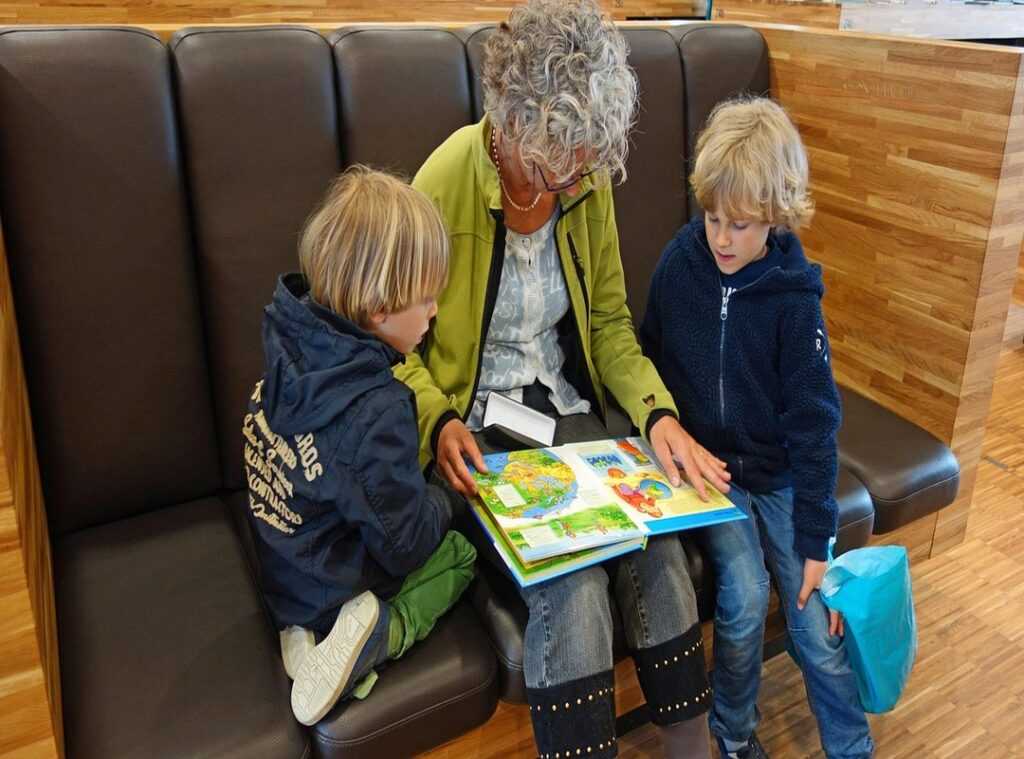
Reading, as always, is a powerhouse tool. Interactive reading isn’t just reading the words on the page. It’s about asking questions, like “Where is the dog?” and pointing to pictures.
Use different voices for characters. Make it a performance! You’ll find it turns into a back-and-forth that’s as engaging for you as it is for them.
It’s more than just fun; it’s a gateway to language acquisition children thrive on.
Be a copycat. Mimicking a child’s babbles and sounds might seem silly, but it teaches turn-taking in conversation. When you repeat their sounds, you’re telling them, “I hear you.” It makes them feel important.
It’s a little game that establishes communication as a two-way street.
Then there’s the art of playful sabotage. It’s as fun as it sounds. Give your child a bowl but “forget” the spoon.
Watch them ask for it. It’s a playful way to encourage requests and it builds language skills through necessity. They learn to express needs in their own words.
Songs and rhymes are magical for rhythm and repetition. Think “Old MacDonald” or “Wheels on the Bus.” They’re not just catchy. They’re solid tools for learning new words and speech patterns.
Music is a universal language, after all.
Remember, the goal isn’t to force learning. It’s to weave it naturally into your everyday. By being mindful during these activities, you’re setting the stage for a future filled with words and conversations.
And that’s what matters. Want more on language development? Check out language acquisition children for deeper takeaways.
More Than Just Words: Non-Verbal Communication’s Impact
We often think communication begins when words are spoken. But really, it starts much earlier. Eye contact, for instance, lays the groundwork for connection. When I look a child in the eyes, I’m showing I’m present with them.
It’s a simple act, yet it speaks volumes. They feel seen. It’s a key component in language acquisition for children.
Gestures also play a significant role. Think about how kids point or clap. Before they can say what they want, they rely on these to express needs.
Isn’t that fascinating? It’s like a prelude to full language.
Now, let’s talk about listening. Ever tried getting on a child’s level? Literally and figuratively.
I find that crouching down and really listening to their non-verbal cues changes everything. It shows them I value their world. Doesn’t that build a foundation for better conversations later?
For those curious about the depths of child behavior, this guide is insightful (you might learn something unexpected).
Pro tip: When you respond to a child’s gestures with words, you’re reinforcing their communication pathway. It’s all about building bridges before the words flow.
When to Check In: A Gentle Guide to Potential Delays
Trust your gut. Seriously, when it comes to your child’s development, intuition is key. You know your kid best, so if something feels off, it probably is.
Language acquisition in children is a journey, and every kid’s path is a bit different. But there are times when you might want to check in with a pro. Here are some things to keep an eye on: not responding to their name by 12 months, not using gestures like pointing by 18 months, or not speaking in two-word phrases by two years.
If any of these sound familiar, don’t panic. Just chat with your pediatrician. They can guide you on the next steps.
You can ask for a developmental screening or connect with local early intervention services. Be the advocate your child needs.
Remember, these are just signs to consider, not definitive answers. And hey, sometimes kids just take their sweet time. But when in doubt, ask.
After all, you’re the expert on your child, even if you don’t always feel like it.
Talk, Play, Connect
Worried if your kid is on track with language acquisition children? Relax. This isn’t a sprint.
It’s a journey filled with everyday chats and playtime. Remember, those simple, daily interactions we talked about? They’re your strongest tools.
It’s not just about the milestones but about enjoying the process.
So what now? Pick one new activity from our list and dive in. Watch your child learn to communicate.
It’s fascinating. Need proof? Thousands of parents have taken these steps (and seen results).
Start today. Savor the moments. Your child’s voice is worth it.
Let’s get talking and playing.
 James Raynerovans writes the kind of child wellness and growth insights content that people actually send to each other. Not because it's flashy or controversial, but because it's the sort of thing where you read it and immediately think of three people who need to see it. James has a talent for identifying the questions that a lot of people have but haven't quite figured out how to articulate yet — and then answering them properly.
They covers a lot of ground: Child Wellness and Growth Insights, Tips on Positive Behavior Strategies, Time-Saving Routines for Busy Moms, and plenty of adjacent territory that doesn't always get treated with the same seriousness. The consistency across all of it is a certain kind of respect for the reader. James doesn't assume people are stupid, and they doesn't assume they know everything either. They writes for someone who is genuinely trying to figure something out — because that's usually who's actually reading. That assumption shapes everything from how they structures an explanation to how much background they includes before getting to the point.
Beyond the practical stuff, there's something in James's writing that reflects a real investment in the subject — not performed enthusiasm, but the kind of sustained interest that produces insight over time. They has been paying attention to child wellness and growth insights long enough that they notices things a more casual observer would miss. That depth shows up in the work in ways that are hard to fake.
James Raynerovans writes the kind of child wellness and growth insights content that people actually send to each other. Not because it's flashy or controversial, but because it's the sort of thing where you read it and immediately think of three people who need to see it. James has a talent for identifying the questions that a lot of people have but haven't quite figured out how to articulate yet — and then answering them properly.
They covers a lot of ground: Child Wellness and Growth Insights, Tips on Positive Behavior Strategies, Time-Saving Routines for Busy Moms, and plenty of adjacent territory that doesn't always get treated with the same seriousness. The consistency across all of it is a certain kind of respect for the reader. James doesn't assume people are stupid, and they doesn't assume they know everything either. They writes for someone who is genuinely trying to figure something out — because that's usually who's actually reading. That assumption shapes everything from how they structures an explanation to how much background they includes before getting to the point.
Beyond the practical stuff, there's something in James's writing that reflects a real investment in the subject — not performed enthusiasm, but the kind of sustained interest that produces insight over time. They has been paying attention to child wellness and growth insights long enough that they notices things a more casual observer would miss. That depth shows up in the work in ways that are hard to fake.