When an emergency strikes, the last thing any parent wants is to scramble for a plan. You’re here because you want clarity, confidence, and practical steps to protect your family before the unexpected happens. This guide will walk you through creating a family emergency preparedness plan that’s realistic, easy to maintain, and designed specifically for busy households.
We’ve reviewed recommendations from emergency management agencies, pediatric safety experts, and real-world family case studies to ensure the guidance here is both practical and reliable. Instead of overwhelming you with worst-case scenarios, this article focuses on simple, actionable strategies you can put in place right away.
From communication plans and emergency kits to age-appropriate safety conversations and routine check-ins, you’ll learn exactly how to prepare your home and your children with confidence—so if a crisis occurs, your family knows exactly what to do.
Last summer, a sudden storm warning lit up my phone, and minutes later the power went out. I stood in the kitchen, clueless. NO FLASHLIGHTS. Dead phones. Kids scared.
I had meant to create a family emergency preparedness plan, but kept postponing it because it felt overwhelming.
Here’s what I learned: waiting is the real risk.
• Start with water and backup batteries.
• Write down emergency contacts.
• Practice a simple exit drill.
Small steps build calm. You don’t need perfection; you need preparation. Today, we feel ready for whatever comes. Preparation turns panic into calm steady confident action.
Your Family’s Communication Lifeline: Staying Connected When It Matters Most
First and foremost, communication is the foundation of any family emergency preparedness plan. Without it, even the best supplies or escape routes can unravel (think Home Alone, but less funny). In crises, confusion spreads faster than facts. The CDC notes that clear communication improves safety outcomes during disasters (CDC.gov). In other words, if no one knows the plan, there is no plan.
So, start with a master contact list. Include cell numbers, emails, and work or school lines. Keep a printed copy in every backpack or wallet and a digital version on each phone. If batteries die, paper wins (old school, but reliable). Pro tip: laminate the cards to make them weather resistant.
Next, designate one out-of-town contact. During emergencies, local lines often jam while long-distance calls may still connect, according to FEMA. For example, after regional storms, families frequently reconnect faster through relatives in other states.
Then, establish two meeting spots: one just outside your home, like a neighbor’s mailbox, and another outside your neighborhood, such as a library.
Finally, practice calmly. Make it a low-stress “what if” game. Looking ahead, experts speculate digital emergency apps will become standard tools—but nothing replaces practiced habits.
The “Grab-and-Go” vs. “Hunker-Down” Kits: What Your Family Actually Needs
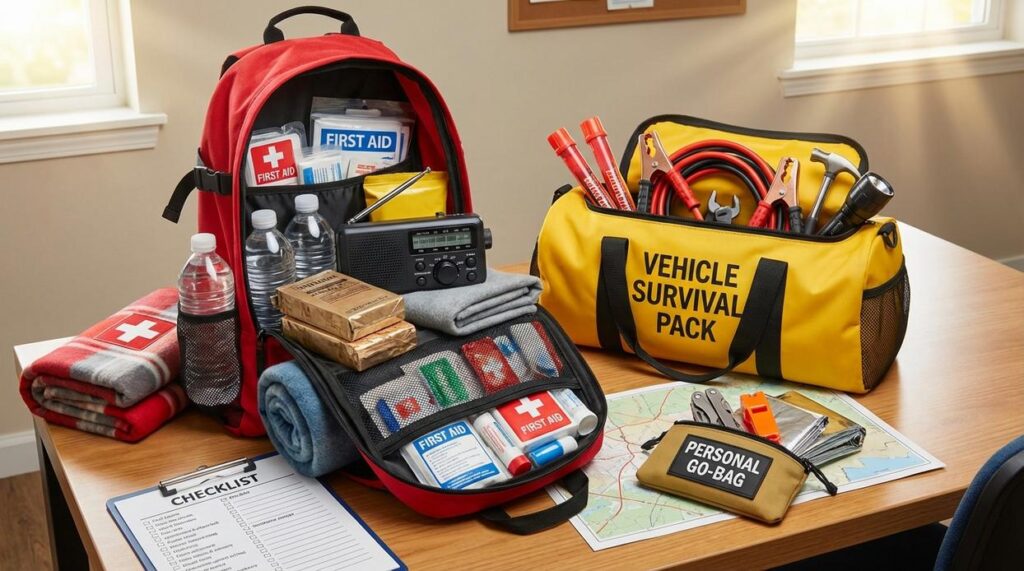
If you only prepare one emergency kit, I’m going to say something slightly controversial: you’re not actually prepared. (I know, that stings a little.) A smart family emergency preparedness plan separates what you need to run out the door fast from what you need to ride out a crisis at home.
Let’s break it down clearly.
The “Go-Bag” (One Per Person)
This is your 72-hour survival kit. Think wildfire evacuation, sudden flooding, or a late-night emergency alert buzzing your phone.
Each family member should have their own bag. Yes, even kids (within reason).
Go-Bag Checklist:
- Water bottle and portable water filter
- High-energy, non-perishable snacks
- Flashlight with extra batteries
- Small first-aid kit
- Copies of important documents (digital and physical)
- Personal hygiene items
- A change of clothes
- Comfort item for kids (small toy or book)
Parenting Essential: If you have an infant, include diapers, wipes, formula, and bottles. No exceptions.
Some people argue that one large family bag is easier. I disagree. In a chaotic moment, distributing weight matters (and kids feel calmer when they carry something familiar).
The “Stay-at-Home” Kit
This is your hunker-down setup. Think power outages, winter storms, or supply disruptions.
Stay-at-Home Checklist:
- One gallon of water per person per day
- Two-week supply of non-perishable food
- Manual can opener
- Comprehensive first-aid kit
- Battery-powered or hand-crank radio
- Flashlights
- Sanitation supplies (wipes, garbage bags)
- Offline entertainment like books, cards, and board games
Some say two weeks is excessive. I think it’s realistic. Disasters rarely resolve in 48 hours, and grocery shelves empty fast (remember 2020?).
Prepare for both. One gets you out safely. The other helps you stay sane.
Involving Your Kids Without Frightening Them
Talking about emergencies doesn’t have to feel SCARY. In fact, when done right, it can make kids feel SAFE and CONFIDENT.
Start by framing preparedness as something positive. Instead of calling it an “emergency plan,” try names like Family Safety Team or “Adventure Practice.” (Kids are far more excited to join a team than attend a lecture.)
Give each child an age-appropriate role:
- A younger child can be the Flashlight Master who checks batteries.
- An older child can help monitor food dates or organize supplies.
This builds ownership and reduces anxiety because they feel IN CONTROL.
Role-playing is especially powerful. Ask, “What would we do if the lights went out for a long time?” Then practice with a living room campout using flashlights and snacks. It turns uncertainty into a GAME instead of a threat.
Be clear about the “why” in simple language: “We have a family emergency preparedness plan so we always know how to stay safe and take care of each other.” Reassurance matters more than details.
Pro tip: Tailor explanations based on your child’s stage of development. If you’re unsure what’s age-appropriate, review guidance on understanding child development milestones by age.
Preparedness isn’t about fear. It’s about teaching resilience, responsibility, and calm problem-solving—skills they’ll use for LIFE.
Beyond the Basics: Vital Steps Most Families Overlook
First, gather your family by the humming breaker box and practice shutting off water, gas, and electricity. Feel the metal valves, hear the click of switches—confidence grows with repetition.
Next, scan birth certificates, passports, insurance papers, and deeds; store them in an encrypted cloud and tuck originals into a fireproof, waterproof safe. Imagine smoke in the air—digital backups keep hope intact.
Finally, pack a pet Go-Bag with kibble, water, medications, and vaccination records. Leashes coiled, tags jingling, you’ll be ready when seconds matter. Add these steps to your family emergency preparedness plan.
You started this journey feeling overwhelmed, unsure where to begin. Now, you have a clear, step-by-step family emergency preparedness plan designed to replace chaos with confidence. Instead of one giant, intimidating task, you have small, manageable actions—like organizing emergency contacts, assembling Go-Bags with water, flashlights, and first-aid basics, and reviewing evacuation routes. Each feature serves a purpose: clarity reduces panic, preparation protects your kids, and structure saves precious time. Most importantly, this plan works because progress builds momentum. So today, take one simple step. Add an out-of-town contact to every phone or pack one Go-Bag. The first move changes everything.
Take the Next Step Toward Peace of Mind
You came here looking for clarity, reassurance, and practical ways to protect your family when the unexpected happens. Now you understand exactly why having a family emergency preparedness plan isn’t just helpful — it’s essential for your child’s safety and your own peace of mind.
Emergencies don’t wait until you feel ready. The stress, confusion, and fear of not knowing what to do can overwhelm any parent. But with a clear plan in place, you replace panic with confidence and uncertainty with action.
Start today. Sit down with your family, outline your emergency contacts, gather basic supplies, and walk through simple safety steps together. Even 30 minutes of preparation can make a life‑changing difference.
Thousands of proactive moms are already putting smart systems in place to protect what matters most. Don’t wait for a crisis to wish you had prepared.
Take action now, create your family emergency preparedness plan, and give your family the security and calm they deserve.
 Director of Strategy & Routine Architecture