If you’re searching for a realistic, sustainable morning routine for moms, you’re likely tired of chaotic starts, rushed breakfasts, and feeling behind before the day even begins. The truth is, most routines you see online aren’t built for real-life parenting demands. This article is designed to change that.
Here, you’ll find practical, time-saving strategies that work for busy households—whether you’re managing toddlers, school drop-offs, or remote work. We focus on simple systems, behavior-friendly transitions, and small habit shifts that make a big impact without adding pressure to your plate.
Our guidance is grounded in child development principles, proven time-management techniques, and real-world parenting experience. By the end, you’ll have a clear, adaptable plan to create calmer mornings, reduce stress, and start your day feeling prepared instead of overwhelmed.
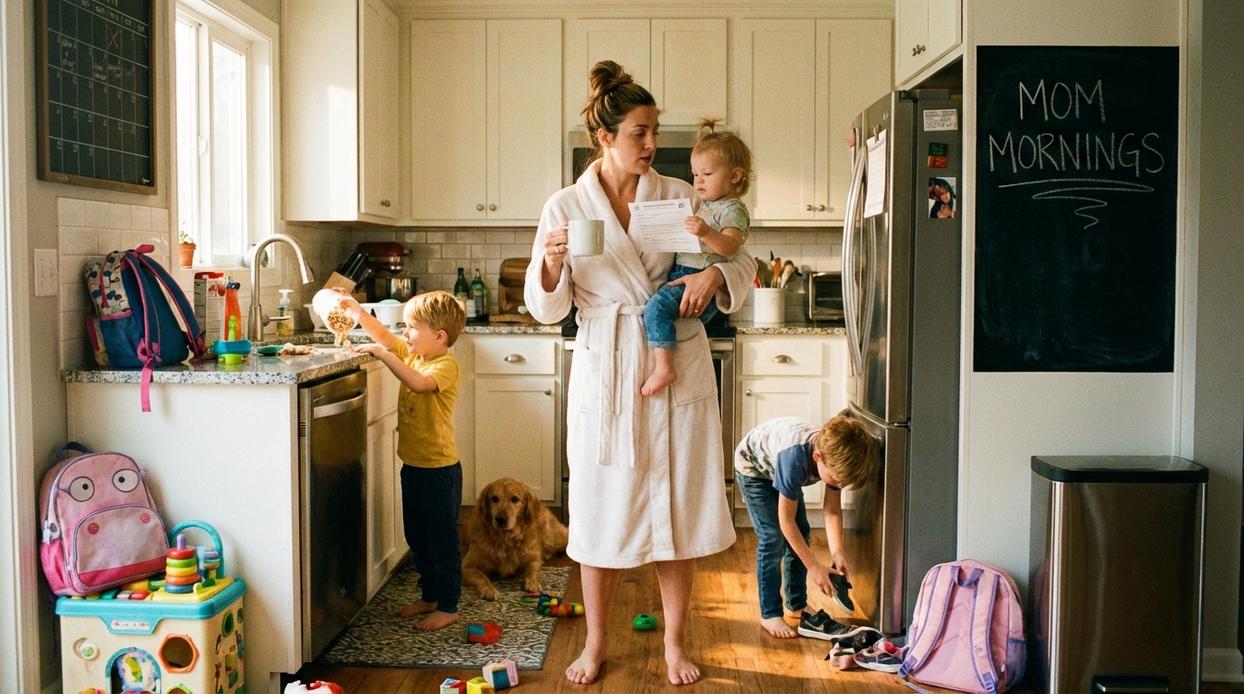
Every parent knows the chaos: the morning rush, missing shoes, last-minute permission slips, and that nagging sense you’re already behind. The real problem, in my opinion, isn’t laziness or lack of love—it’s the absence of a simple, repeatable system. Without one, stress snowballs into burnout. That’s why I believe a practical morning routine for moms can change everything. These aren’t Pinterest-perfect theories; they’re field-tested habits shaped by real families. So, instead of chasing perfection, you’ll find actionable, time-saving steps you can use immediately to reclaim calm and actually win the day. And yes, consistency beats motivation every time. Trust me.
The 5-Step Morning Launchpad: Winning Your Day Before 8 AM
Mornings don’t have to feel like a fire drill. With a little prep and a lot of intention, you can shift from chaos to calm.
1. The “Parent-First” 15 Minutes
First, wake up 15 minutes before the kids. Use this pocket of quiet to hydrate (even mild dehydration affects focus, according to the CDC), stretch, or mentally review your schedule. Think of it as booting up your brain before the notifications start. Those few minutes create clarity that ripples through the day.
2. The “Get-Ready” Station
Next, eliminate decision fatigue—defined as the mental drain from too many small choices—by setting out clothes, backpacks, and shoes the night before. A designated basket or bench works wonders. Fewer choices at 7 a.m. means fewer meltdowns (yours included).
3. The “Breakfast Blueprint”
Then, simplify food. Prep smoothie packs, overnight oats, or egg bites ahead of time. Research from Harvard T.H. Chan School of Public Health notes that balanced breakfasts improve concentration and energy. When breakfast is automatic, stress drops instantly.
4. The “Connection Point”
Before everyone scatters, pause for five screen-free minutes together. Ask one simple question: What’s one thing you’re looking forward to today? This quick check-in strengthens emotional security and sets a positive tone.
5. The “Exit Strategy”
Finally, create a launchpad by the door for keys, wallets, and lunchboxes. No last-minute searching. No shouting matches.
When done consistently, this morning routine for moms turns frantic starts into focused launches.
Taming the After-School Whirlwind: The 3 ‘R’s’ Routine
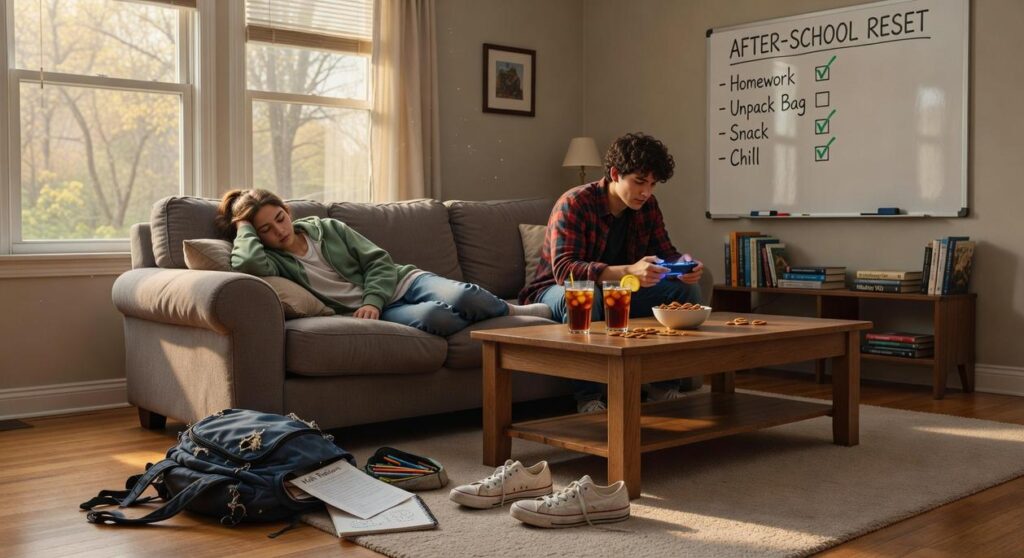
The hours after school can feel like a pressure cooker. Kids walk in hungry, overstimulated, and one missing snack away from a meltdown. You can either react to chaos—or design a simple system that prevents it.
The First “R” – Refuel
Option A: Kids rummage through the pantry, grab cookies, and crash 30 minutes later.
Option B: A self-serve snack station with protein + fiber options ready to go.
A self-serve snack station is a designated drawer or bin stocked with pre-approved, grab-and-go foods. Think:
- Apple slices with nut butter packets
- Cheese sticks or yogurt
- Trail mix
- Whole-grain crackers
Balanced snacks stabilize blood sugar, which helps regulate mood and focus (Harvard T.H. Chan School of Public Health). Translation: fewer after-school tears over math homework. (Hangry isn’t a personality trait—it’s biology.)
The Second “R” – Reset
Instead of diving straight into homework, try the 20-Minute Decompression Rule: 20 minutes of free play, quiet reading, or talking about their day.
Homework immediately = resistance.
20-minute reset first = cooperation.
This transition buffer lowers stress and improves attention (American Academy of Pediatrics). Think of it as the bridge between school mode and home mode—similar to a morning routine for moms that sets the tone for the day.
The Third “R” – Responsibility
The One-Touch Rule means backpacks and lunchboxes are emptied immediately—no tossing, no postponing.
- Papers into folders
- Lunchboxes to the sink
- Homework to the desk
Small, consistent habits beat occasional lectures. (Yes, even if you have to remind them 47 times at first.)
When afternoons run smoothly, evenings follow. Pair this with an intentional evening reset routine how to prepare for a stress free tomorrow to close the loop and start fresh the next day.
The Evening Wind-Down: A Blueprint for Peaceful Nights
Evenings don’t have to feel like a relay race to bedtime. In fact, research shows that consistent nightly routines improve children’s sleep quality and behavior (American Academy of Pediatrics). The key is structure—with just enough flexibility to feel human.
The “Power Hour” Tidy-Up
First, set a 15-minute timer and turn cleanup into a family sprint. Everyone participates. Play upbeat music, assign quick zones, and race the clock. Studies show children are more likely to complete tasks when they’re time-bound and collaborative. (It’s amazing what a timer and a little competition can do.) Over time, this habit builds responsibility while reducing parental burnout.
The “Next-Day” Prep Synergy
Meanwhile, as the kids tidy, you prep for tomorrow—pack lunches, lay out clothes, organize backpacks, and set up a simple “Get-Ready” station. This overlap doubles productivity and lowers morning stress. In one survey by Sleep Foundation, 68% of parents reported smoother mornings when preparation happened the night before. It also makes your morning routine for moms feel calmer and more intentional.
The “Screen-Free” Transition
Next, power down all screens at least one hour before bed. Blue light suppresses melatonin, the hormone that regulates sleep (Harvard Medical School). Instead, swap screens for puzzles, reading, or soft music. Think cozy, not chaotic.
The Bedtime Ritual
Finally, keep bedtime predictable: bath, books, brief chat, lights out. Repetition signals safety to a child’s brain. Over time, this rhythm becomes a cue for sleep—no dramatic curtain call required.
You’re not starting from scratch anymore. You now have a practical toolkit to shift your home from chaotic to calm. The real problem was never laziness or lack of love—it was parental overwhelm. Too many decisions. Too little predictability. As one mom told me, “By 9 a.m., I’ve already made a hundred choices—and I’m exhausted.”
These simple systems fix that. They reduce decision-making. They create rhythm. And rhythm creates relief. When your child says, “Oh, we always do it this way,” that’s not boredom—that’s security.
Some argue routines feel restrictive. “I don’t want my house to run like a boot camp,” one parent joked. Fair. But this isn’t about rigidity. It’s about consistency over perfection. Flexible. Forgiving. Built for real life (because real life is messy).
Calm doesn’t come from doing more. It comes from repeating what works.
Start with one small shift—maybe a morning routine for moms.
Choose just ONE new routine to try this week. Starting small is the secret to habits that stick—and lasting calm.
Make Your Mornings Work for You
You came here looking for a realistic way to create calmer, smoother starts to your day—and now you have the tools to do exactly that. From simple planning strategies to small habit shifts, you’ve seen how a consistent morning routine for moms can reduce chaos, support your child’s behavior, and protect your own energy before the day even begins.
The truth is, rushed mornings don’t just feel stressful—they set the tone for everything that follows. When you’re overwhelmed before 8 a.m., it’s harder to stay patient, focused, and present. But with a few intentional changes, your mornings can feel organized, predictable, and empowering instead of frantic.
Now it’s time to take action. Choose one strategy from this guide and start tomorrow. Keep it simple. Stay consistent. Build from there.
If you’re tired of chaotic mornings and want proven, mom-tested routines that actually work, explore our top-rated parenting resources trusted by modern moms everywhere. Start today and turn your mornings into the calm, confident foundation your family deserves.
 Founder & Chief Visionary