Sibling arguments can turn even the calmest day into chaos. If you’re tired of playing referee and breaking up the same fights on repeat, you’re not alone. But stopping the noise isn’t the real goal—teaching lasting skills is. This guide focuses on conflict resolution for children by giving you a clear, practical framework that builds empathy, communication, and problem-solving. Instead of punishments or forced apologies, you’ll learn how to coach your kids through disagreements in ways that prepare them for school, friendships, and adulthood. If you’re looking for step-by-step strategies you can start using today, you’re in the right place.
The Real Goal: Why Conflict Can Be a Healthy Part of Growing Up
By equipping young children with simple conflict resolution techniques, we not only help them navigate disagreements but also foster the Signs of Healthy Emotional Development in Kids, creating a foundation for their future relationships.
It sounds strange, but conflict isn’t a parenting failure. It’s practice. When kids argue over a toy or whose turn it is, they’re learning how relationships actually work (and yes, it can be loud).
Shifting your mindset starts with one question: What can my child learn here? Instead of stepping in immediately, try:
- Pausing for 30 seconds before intervening
- Asking each child to explain what happened
- Helping them name their feelings
These small steps build empathy (understanding others’ feelings), negotiation (finding middle ground), and emotional regulation—the ability to manage big reactions.
For example, if two siblings fight over a tablet, guide them to suggest solutions: set a timer, take turns, or choose another activity. This simple act of problem-solving is conflict resolution for children in action.
The long-term payoff? A child who can settle a toy dispute today can collaborate on school projects tomorrow—and navigate workplace disagreements later. That’s growth.
The 5-Step “Peace Process”: A Parent’s Script for Coaching Kids Through Conflict
Siblings arguing over a toy can escalate faster than a superhero sequel. Yet research shows that children who are taught structured conflict resolution for children skills develop stronger emotional regulation and social competence (American Academy of Pediatrics, 2021). In other words, these small moments matter.
Step 1: Calm the Storm (The Cool-Down Corner)
First, press pause. Neuroscience tells us that when kids are flooded with emotion, the brain’s prefrontal cortex—the reasoning center—goes offline (Siegel & Bryson, The Whole-Brain Child). Create a “cool-down corner” with pillows, books, or sensory toys. Encourage deep belly breaths or a quiet activity. Talking happens only when everyone is calm (yes, even you).
Step 2: Share Your Story (Using “I Feel” Statements)
Next, give each child a script: “I feel frustrated when…” instead of “You always ruin everything.” This shift builds emotional ownership. According to CASEL, teaching kids to label feelings improves self-management and reduces aggressive behavior. It’s a small wording change with big ripple effects.
Step 3: Hear Each Other Out (The Echo Rule)
Now comes the magic trick: listening. One child repeats what they heard. “So, you felt sad because you thought it was still your turn?” Studies on active listening show it increases empathy and decreases defensiveness (Rogers & Farson, 1957). If they can echo it, they understood it.
Step 4: Brainstorm Solutions Together (No Bad Ideas)
Then, ask: “What are some ways we can solve this?” Encourage multiple ideas—even silly ones (a coin flip? a dance-off?). Collaborative problem-solving models reduce recurring sibling conflict, according to research from the Journal of Family Psychology.
Step 5: Choose a Plan and Shake On It
Finally, evaluate options and agree on one to try. When kids help create the solution, they’re more likely to follow through. Pro tip: revisit the plan later and adjust if needed. Peace, after all, is a process—not a one-time treaty.
Common Parenting Traps That Escalate Fights (And How to Avoid Them)
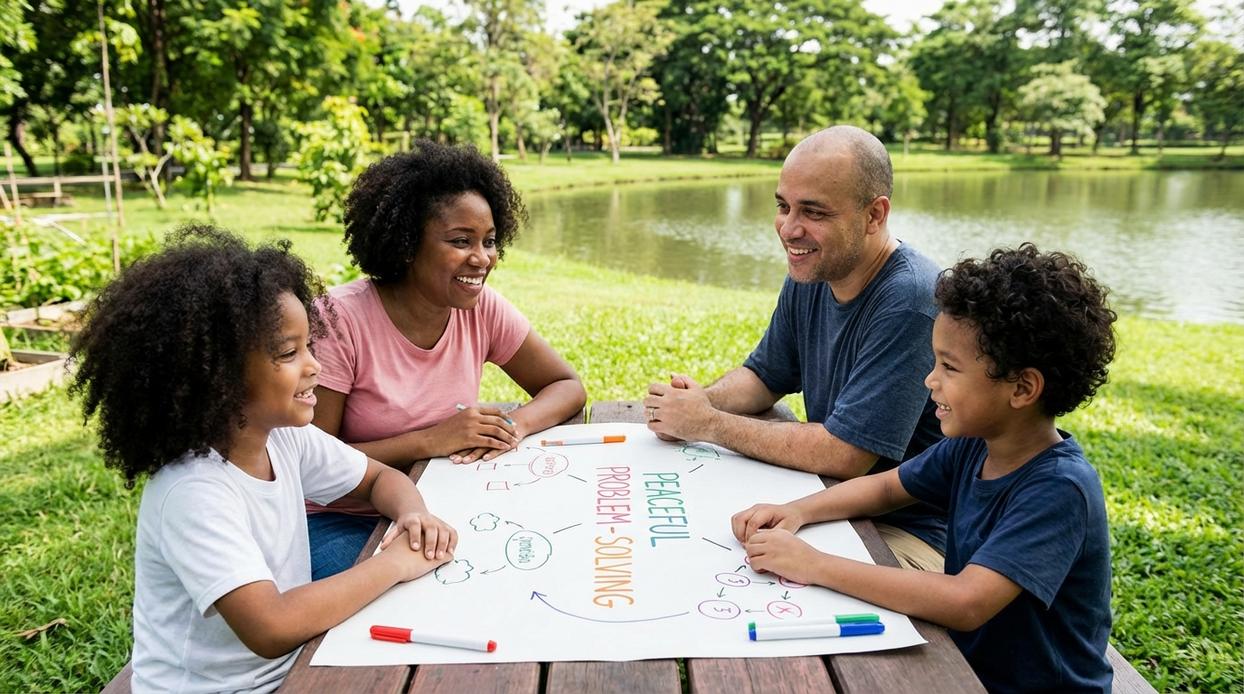
Sibling fights can feel like a courtroom drama—complete with loud objections and dramatic exits. However, how you step in makes all the difference.
The Trap of Playing Judge
When you declare who’s “right” and “wrong,” you may end the noise quickly—but you also plant seeds of resentment. Kids start performing for a verdict instead of solving the problem. Over time, they rely on you as referee rather than building their own conflict resolution for children skills. Instead, stay neutral. Say, “I hear you both. What happened?” This empowers them to think critically, communicate clearly, and feel heard. The benefit? They gain confidence handling disagreements long after the toy dispute is forgotten.
The Trap of the Forced Apology
A rushed “Say you’re sorry” rarely builds empathy. It teaches compliance, not care. Rather than scripting their words, ask, “How do you think that made your brother feel?” This simple shift strengthens emotional intelligence (the ability to understand others’ feelings) and supports teaching empathy through everyday moments: https://fpmomtips.com.co/teaching-empathy-through-everyday-moments/. When kids connect actions to emotions, apologies become genuine—and relationships grow stronger.
The Trap of Solving It For Them
Yes, timers are faster. But coaching beats controlling. When children brainstorm solutions, they develop negotiation skills, patience, and resilience. In the long run, that’s the real win (and fewer referee shifts for you).
Adapting Your Strategy: Conflict Resolution by Age
Have you ever noticed how a squabble over a toy looks completely different at age three than it does at age eight? That’s because kids process conflict at different developmental stages—and your approach should shift, too.
For Toddlers (Ages 2–4): At this stage, think redirection. Use simple, clear phrases like “Gentle hands.” Then physically separate them and offer a new toy or activity. You’re modeling behavior more than teaching logic (reasoning rarely works mid-tantrum).
For Preschoolers (Ages 4–6): Now you can introduce basic “I feel” statements. They’re starting to grasp empathy. Keep solutions concrete: set a timer for turns or choose a shared game. Sound familiar?
For School-Aged Kids (7+): They’re ready for more independence. Encourage them to try solving the issue first, stepping in only if needed.
Ultimately, effective conflict resolution for children grows with them—are you adjusting your strategy as they grow, too?
Building a Foundation for a More Peaceful Home
You came here looking for a practical way to stop feeling like the referee and start guiding real conflict resolution for children—and now you have a clear, step-by-step path to do exactly that. Disagreements may still pop up, but they no longer have to hijack your entire day or leave everyone drained and frustrated. By consistently using this framework, you’re not just breaking up fights—you’re building emotional intelligence your kids will use for life. The next time tensions rise, try just Step 1 (Calm the Storm) and Step 2 (Share Your Story). Start there, stay consistent, and watch the shift unfold.
 Vanessa W. has opinions about child wellness and growth insights. Informed ones, backed by real experience — but opinions nonetheless, and they doesn't try to disguise them as neutral observation. They thinks a lot of what gets written about Child Wellness and Growth Insights, Daily Digest, Time-Saving Routines for Busy Moms is either too cautious to be useful or too confident to be credible, and they's work tends to sit deliberately in the space between those two failure modes.
Reading Vanessa's pieces, you get the sense of someone who has thought about this stuff seriously and arrived at actual conclusions — not just collected a range of perspectives and declined to pick one. That can be uncomfortable when they lands on something you disagree with. It's also why the writing is worth engaging with. Vanessa isn't interested in telling people what they want to hear. They is interested in telling them what they actually thinks, with enough reasoning behind it that you can push back if you want to. That kind of intellectual honesty is rarer than it should be.
What Vanessa is best at is the moment when a familiar topic reveals something unexpected — when the conventional wisdom turns out to be slightly off, or when a small shift in framing changes everything. They finds those moments consistently, which is why they's work tends to generate real discussion rather than just passive agreement.
Vanessa W. has opinions about child wellness and growth insights. Informed ones, backed by real experience — but opinions nonetheless, and they doesn't try to disguise them as neutral observation. They thinks a lot of what gets written about Child Wellness and Growth Insights, Daily Digest, Time-Saving Routines for Busy Moms is either too cautious to be useful or too confident to be credible, and they's work tends to sit deliberately in the space between those two failure modes.
Reading Vanessa's pieces, you get the sense of someone who has thought about this stuff seriously and arrived at actual conclusions — not just collected a range of perspectives and declined to pick one. That can be uncomfortable when they lands on something you disagree with. It's also why the writing is worth engaging with. Vanessa isn't interested in telling people what they want to hear. They is interested in telling them what they actually thinks, with enough reasoning behind it that you can push back if you want to. That kind of intellectual honesty is rarer than it should be.
What Vanessa is best at is the moment when a familiar topic reveals something unexpected — when the conventional wisdom turns out to be slightly off, or when a small shift in framing changes everything. They finds those moments consistently, which is why they's work tends to generate real discussion rather than just passive agreement.